 Skip to main content



Understand the S-100 timeline: from the introduction of the IMO Performance Standards to the expected dual-fuel ECDIS era. Discover what these dates mean for ship operators, mariners and ECDIS manufacturers.
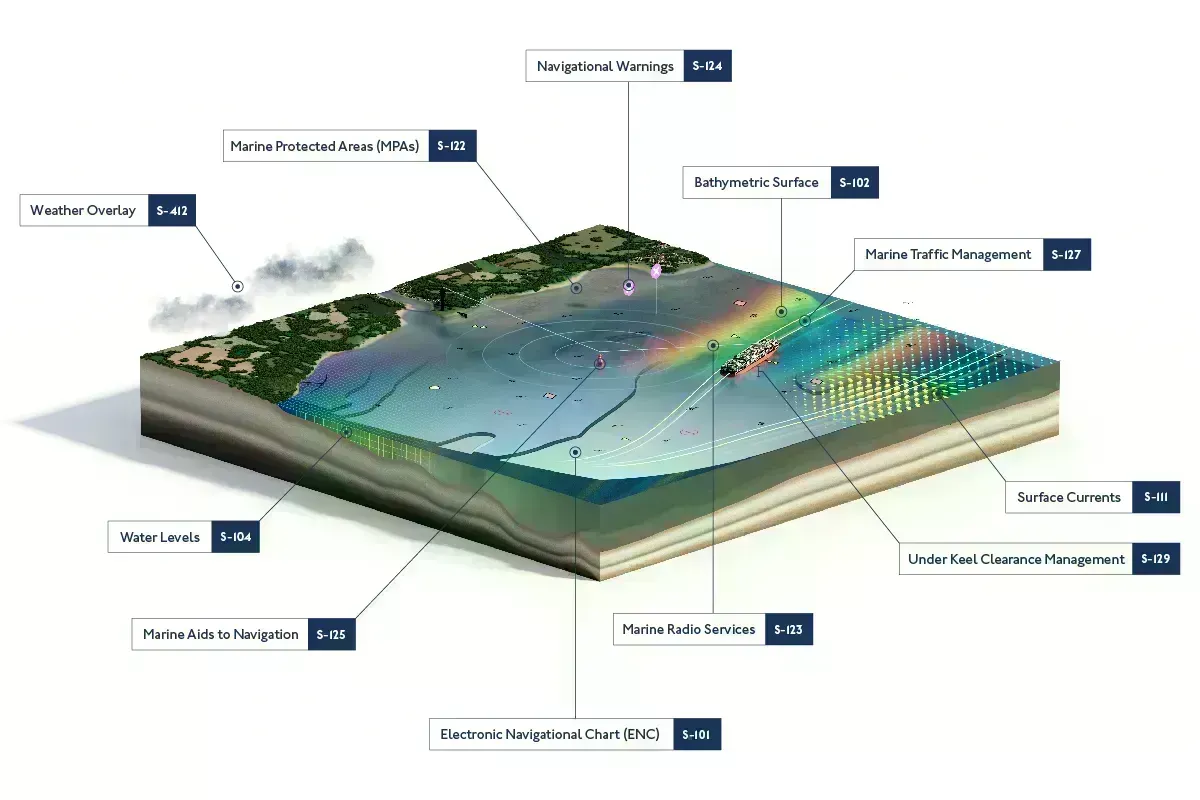
S-100 is the International Hydrographic Organization (IHO)’s new universal hydrographic data model. S-100 is the broad name of the maritime data framework that will be made up of product specifications that define new ‘data layers’ (when visualised).
Each serving a specific purpose, these data layers start with S-101 Electronic Navigational Charts (ENCs) as their foundation. A modern replacement of S-57 (The current format for ENCs), S-101 ENCs are intentionally similar in look and feel to S-57 but with detail and clarity improvements.
However, the crucial improvement of S-101 is that further S-100 data layers can be overlaid on top of S-101 and interoperate with one another to enhance situational awareness, decision making and voyage safety. Ultimately, it is expected that S-100 will enable a richer, more comprehensive view of the marine environment.
Why clarity on S-100 timelines matters
With the first major S-100 milestones approaching, some of the most common questions from ship operators and mariners at recent maritime industry events have been about timelines for implementation. For example, ‘I would like more detail on the S-100 transition period’ and ‘When will there be a type-approved S-100 ECDIS?’
This guide to S-100 timelines aims to provide key dates and milestones for the transition to S-100 ECDIS. It is designed to help you plan confidently; to understand what is not changing, what is changing and when.
However, 2020-2030 is the IHO’s S-100 implementation decade. Their roadmap is global and understandably complex and remains subject to possible revisions. At the UKHO, it is our intention to help provide clarity to users and the wider industry as we move closer toward implementation.
The S-100 timeline begins
Adopted in November 2022, the IMO’s revised ECDIS Performance Standards (MSC.530(106)), marked a turning point. For the first time, they established an international regulatory basis for S-100-capable ECDIS to be fitted and type-approved.
What is the IMO Performance Standard?
The IMO Performance Standard for ECDIS outlines to manufacturers what an ECDIS must be able to do – including how it displays charts, manages updates and supports safe navigation. Since 2006, all new ECDIS have had to meet the standard called MSC.232(82). In 2022, the IMO introduced a new standard – MSC.530(106) – to support the next generation of S-100 data.
RESOLUTION MSC.530(106)/REV.1 (adopted on 24 May 2024) was necessary to facilitate the standardized digital exchange of ships’ route plans and other voyage information between ship and shore using the S-421 format— a key part of the e-navigation concept.
Tom Mellor, Head of Technical Partnerships at the UKHO talks about the timeframe that the IMO Performance Standards establishes for S-100 data.
What does this mean for ship operators?
From 1 January 2026: New ECDIS can follow either the old standard (MSC.232(82)) or the new one (MSC.530(106)/REV.1). However, it is important to note that S-100-compatible systems are still under development, and the testing standards necessary for type approval have yet to be published, meaning no ECDIS will meet the new standard in the short term.
From 1 January 2029: All newly installed ECDIS must meet the new standard (MSC.530(106)/REV.1) – meaning they must be S-100 compatible. This also applies to retrofits.
While the regulatory milestones are clear, the transition will take time and global coordination.
|
Short term (now - 2026) |
Mid term (2026 - 2028) |
Long term (2029 onwards) |
|---|---|---|
|
Short term (now - 2026) - Stay informed by accessing educational resources on S-100 and sign up to S-100 updates for the latest developments.
- If you need to fit new S-57 ECDIS now, talk to your OEM about software upgrades to S-100. Ask if the hardware will be compatible with, and able to run using, S-100 data. The UKHO/Shom will be making data available alongside software for testing. |
Mid term (2026 - 2028) - Follow industry progress of S-100 sea trials and opportunities for early access to S-100 data.
- Assess when a move to S-100 would benefit your organisation. |
Long term (2029 onwards) - Ensure all new ECDIS installations and retrofits are compatible with S-100 and conform to the latest IMO Performance Standard. |
Even after S-100 becomes mandatory, new ECDIS systems will still be able to display today’s S-57 ENCs. This creates a period of ‘dual fuelling’, where mariners can switch between existing S-57 ENCs and new S-100 data for a smooth transition.
Does this mean I will have to replace my ECDIS?
No, there won’t be a requirement to replace existing ECDIS. However, any new installations or retrofits that occur after 1 January 2029 will need to conform to the new performance standard and be capable of displaying S-100 data.
When will S-100 ECDIS become available?
A range of ECDIS manufacturers are already developing and testing S-100-compatible ECDIS systems. Based on current timelines, type-approved S-100 ECDIS are estimated to be commercially available to purchase in 2028.
Before then, non-type-approved systems will be available for testing, familiarisation and back-of-bridge use. The UKHO is working closely with multiple ECDIS manufacturers to support this development; this includes testing S-100 in both shore-based environments and live S-100 sea trials to help ensure that future ECDIS are designed to meet the needs of users.
Andy Murray, Director of Navigation Solutions, Raymarine, speaks about the journey towards a type-approved S-100 ECDIS at the UKHO’s S-100 in focus event at London International Shipping Week.
Understanding the S-100 rollout
The IHO has outlined a phased approach for the rollout of S-100 products, enabling a staged and manageable transition. The initial set of S-100 products supports safe navigation and situational awareness during route monitoring:
- S-101 — Electronic Navigational Charts (ENC)
- S-102 — Bathymetric Surface
- S-104 — Water Levels
- S-111 — Surface Currents
- S-124 — Navigational Warnings
- S-128 — Catalogue of Nautical Products
- S-129 — Under Keel Clearance Management
These datasets are closest to operational deployment since they are currently being tested and trialled to ensure that initial coverage in selected areas will be ready for when S-100 ECDIS become available. While initial coverage will be limited, major ports are likely to be prioritised for data production – as this is where users will benefit most from richer, more precise data.
Trial datasets will continue to be produced and published from 2025-2026, as hydrographic offices like the UKHO continue with testing as part of ongoing S-100 sea trials. Subsequent phases will extend the framework, including additional interoperable data standards such as:
- S-122 — Marine Protected Areas
- S-123 — Marine Radio Services
- S-125 — Aids to Navigation
- S-127 — Marine Traffic Management
- S-131 — Harbour Infrastructure
- S-411/412 — Ice and Weather/Wave Hazards
Industry stakeholders are currently discussing timelines for the development and display of these data standards.
The ‘dual-fuel’ period: bridging S-57 and S-101
During the transition, both S-57 and S-101 ENCs will be used in parallel. This ‘dual fuel’ phase is designed to maintain operational continuity; mariners will continue to use existing ENCs while gaining access to the richer data layers afforded by S-100 where available.
There is currently no planned date for the withdrawal of S-57 ENCs, and both data types will be supported for the foreseeable future to ensure a safe and flexible transition.

Name
Andrew Rigamonti
Andrew Rigamonti is Senior Product Manager for S-100 at the UK Hydrographic Office, with over 16 years of experience working with marine data products. He plays a key role in guiding the UKHO’s transition to the S-100 data framework, working closely with partners across the maritime ecosystem to support industry readiness. Andrew’s work focuses on helping stakeholders understand how S-100 standards could enable richer, more interoperable navigational products and enhance decision-making for mariners and data users worldwide.
Your trusted source for S-100 updates
The UK Hydrographic Office will continue to support the maritime community through this important transition at an appropriate pace.
Just as we supported the industry through the mandatory transition to ECDIS, the UKHO is committed to helping all stakeholders prepare for S-100 with clear guidance, informative seminars, official data and practical tools.
Read more on this topic
Search Title
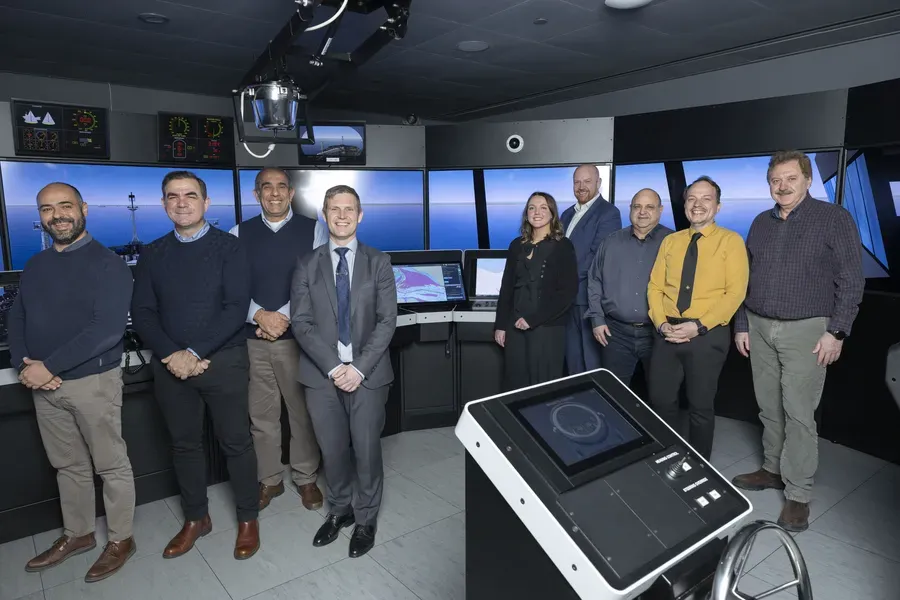
S-100 tested by experienced commercial mariners in Greece
Simulator trials conducted with commercial mariners from leading tanker, LNG and bulk fleets have provided new insight into how S-100 performs in practice, highlighting improvements in clarity, decision-making and planning — alongside the need for careful implementation and training.

Search Title
What Minerva and Angelicoussis bridge teams learned from testing S-100
In March 2026, the UK Hydrographic Office (the UKHO), in collaboration with NorthStandard and ship operators Minerva Marine and the Angelicoussis Group, carried out S-100 simulator trials in Athens, Greece.